

Use environment variables in Hugo configuration #
Blowfish is a theme for Hugo. For site analytics, Blowfish has built‑in support for Fathom Analytics, Google Analytics, and Umami Analytics.
While configuring it, I ran into some confusion at first.
Taking Umami as an example:
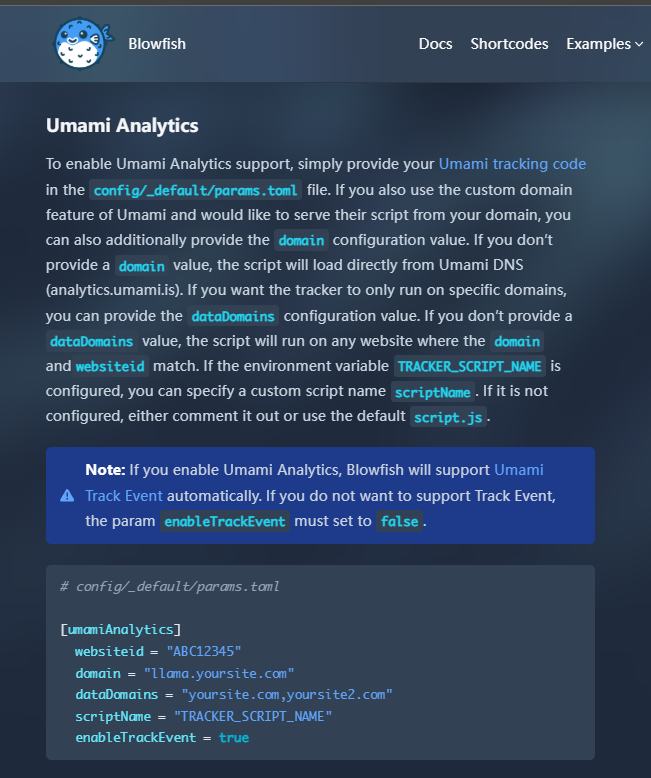
The example in the official docs hard‑codes values in the configuration file.
That felt a bit uncomfortable. Even though I know these settings ultimately become part of the client and visitors can see the injected Umami script and my config values via the browser’s dev tools, I still didn’t want to hard‑code them in the file.
I started looking for a way to use environment variables in the configuration file.
The AI answers were quite hallucinatory: both gemini2.5‑pro and gpt5 assumed Hugo’s getenv function used in templates could be used inside configuration files. It can’t. I also tried a few TOML tricks for variables, but none worked.
Still, I believed Hugo must support environment variables.
After some searching, I finally found hints in the community:
https://github.com/gohugoio/hugo/issues/6276
https://gohugobrasil.netlify.app/getting-started/configuration/#environmental-variables
That confirmed it: Hugo can use environment variables for configuration, so we don’t have to hard‑code values into config files.
Oddly, I couldn’t find an official mention easily. Using Context7 to read the official docs quickly yielded the answer:
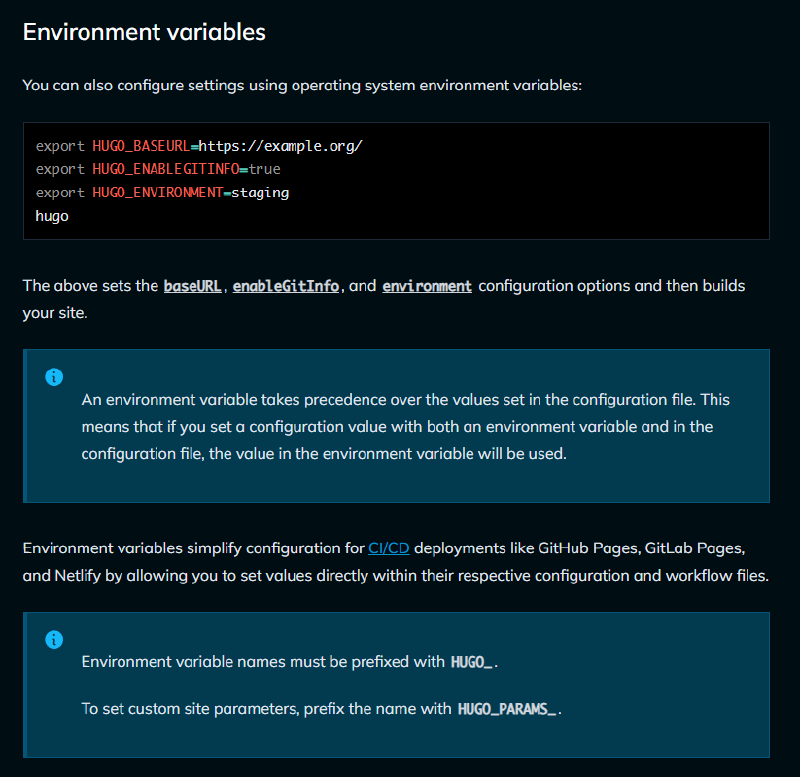
https://gohugo.io/configuration/introduction/#environment-variables
Question settled: Hugo can indeed use environment variables for configuration.
Notes:
- Environment variable names must be all uppercase.
- For params, append PARAMS after the HUGO prefix.
- You can use
_orxas separators; if a variable name contains_, you must usex.
Further reading: about “configuration” #
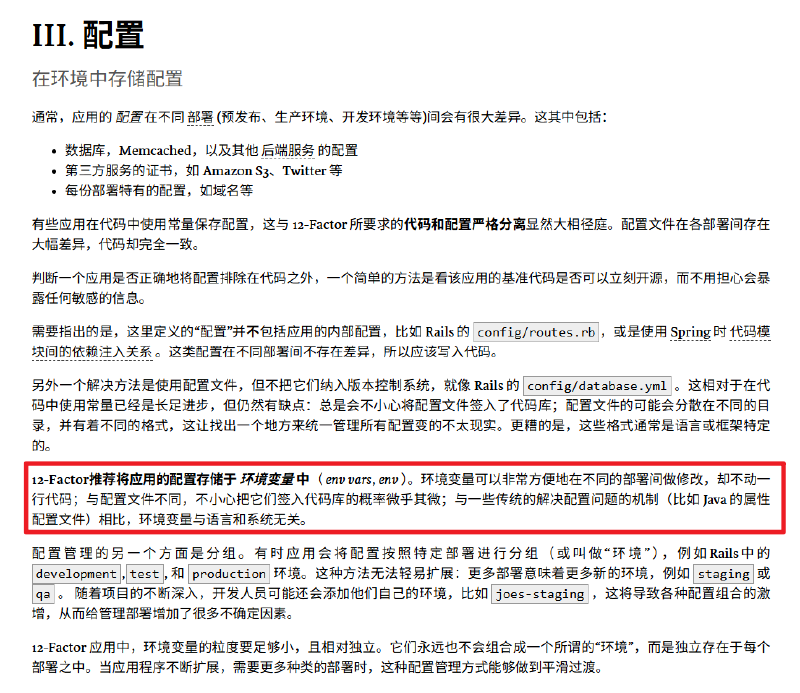
Using environment variables directly for configuration is a widely accepted practice in the industry.
The Twelve‑Factor App explicitly states:
In Hugo, there’s also a standard configuration lookup order:
- Command‑line flags
- Environment variables
- Config file (project root)
- Config file (config directory)
For well‑known projects there’s a 99% chance environment variables work for configuration. If you can’t find official documentation, try AI + Context7 semantic search or look for related discussions in the community.